
Read time: 22 minutes
Blog
The 5 Professionals You Need to Create A Professional Website
A complete guide to who does what and in which order
by Sarah Marshall
This article is for women service providers and female founders who:
- are ready to invest in a professional website
- would prefer to work with individual creatives than a big agency
- aren’t sure where to start, who does what or what questions to ask.
When people decide to invest a new website, many think all they have to do is contact a web designer. But, unless they work with a one-stop-shop like a branding agency, a creative studio or a web development agency, they soon discover all their content ducks need to be in a row before the web designer can get started.
So here’s a complete guide to show you which professionals you need to work with to create a professional website.
You’ll learn:
- which professional creative does what
- why my suggested order makes the most sense
- key questions you need to ask at each stage
- the biggest mistakes to avoid
- reasons not to worry.
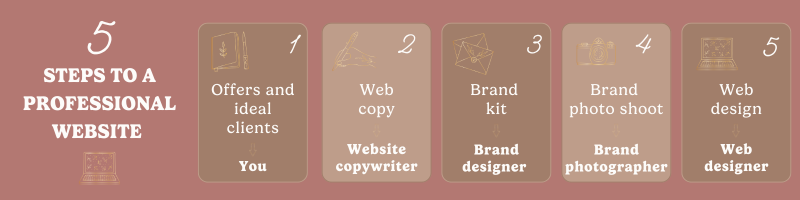
Here’s a quick overview of who does what and in what order…
STEP 1 Define your offers and your ideal clients
STEP 2 Hire a website copywriter to write your website content
STEP 3 Work with a brand designer to create your brand kit
STEP 4 Find a local brand photographer for your photo shoot
STEP 5 Trust a reputable web designer to put it all together
Now let’s look at each step in detail and why I think this is the most logical order to give you the most effective website.
STEP 1 Define your offers and your ideal clients
Yes, you are the first professional in the chain! Nobody knows what you want from your business and what your personal circumstances are as well as you do.
The most exciting thing about creating your new website is that it gives you the perfect opportunity to define your business on your terms. So start by setting aside some time to really think about how you work best, which services you prefer, who you enjoy working with most and how you’d like to structure your working life.
Although you may want to refine your offers with a business coach, marketing strategist or even a strategic copywriter (like me), you are the only person who can answer all those questions.
That’s true whether you’re:
- starting a new business
- creating a different offer
- looking to attract higher paying clients or
- rebranding your current services.
This is your chance to create a website that aligns with your business and life goals.
Everything on your website – the copy, the branding, the photos and the design – will be influenced by what you’re trying to achieve and who your ideal clients are.
Once you’ve done the high-level thinking, you should have a general idea of what services you want to offer and to whom. But before your website copywriter can work their magic, it’s time to get really specific.
Outline the basics for each service
Define each of your services, who they are for and what deliverables and outcomes people will get when they work with you.
You might want to offer different packages of the same service to different clients. Write those as separate offers.
If you think you have too many options, start whittling out the less desirable ones. For instance, if you want to phase out a current service, don’t include it on your website.
Decide on your prices or at least your starting rates. You might not include all of the information on your website but you need to have a fee schedule you can refer to when people ask for a quote. This will help your copywriter understand which end of the market you want to serve as well. Although it’s not obligatory, putting your starting rates on your website helps pre-qualify potential clients before they contact you.
Don’t worry about writing fancy sales messaging at this point, just write down the bare bones of your offers in bullet point form. But do be very clear about:
- who might benefit from each offer (people and problems)
- what is included in each offer (practical details)
- what results they can expect after working with you (solutions and outcomes).
Who defines your offers and your ideal clients?
You.
You and your business coach or marketing strategist.
You and your strategic copywriter.
Key questions
Have you clearly defined your offers?
Who exactly do you want to work with?
What is the transformation you provide for your clients?
Do your offers match the way you want to run your business?
Biggest mistake to avoid
Making general offers to try and please everyone. People like specific choices to compare and contrast with others. You can always add that you are happy to create bespoke proposals.
Reason not to worry
You can shift and pivot as you:
- gain experience
- learn what clients really want
- discover which services you prefer and which ones are most profitable.
STEP 2 Hire a website copywriter to write your website copy
Once you’ve defined your business goals, outlined the features of your offers and identified your target audience, the next step is working with a copywriter to write your website copy.
There are several different kinds of copywriters. Look for one who specialises in website copy. Effective web content is not just about writing well, adding personality or selling the value of your services. It requires strategic and visual thinking as well as an understanding of user experience.
A skilled website copywriter will think about the purpose and layout of each page and the overall flow of your site, including which call to action will lead visitors to the next step. The copy deck – the set of documents with all your website pages – they send you should give the web designer clear instructions on where to add bullet points, tables, links, buttons and perhaps even graphics to each page.
Pay attention to process
Aside from checking out their writing skills (on their own website and their clients’ sites), pay attention to the copywriter’s process.
A good website content writer will ask you about the kind of business you’re trying to build and give considerable thought to your target audience. They will hold interviews with previous clients or do research to make sure your web copy uses real-world language and shows how your offers solve their specific problems.
They will also research your competition to see what is different about your service and identify what others are not saying that potential clients want to know. And they will interview you to capture your tone of voice and the specific words and phrases that will make your website copy sound like you.
You should be able to find a copywriter’s process on their website or detect whether they even have a process by the questions they ask in a discovery call or in their onboarding form.
Website structure
After the research phase, your website copywriter will define the different pages for your website and perhaps send you a rough outline of what goes where (though this isn’t always necessary).
If you already have a website structure in mind, be sure to tell them in your discovery call. And you can help them prioritise content by telling them your favourite or most profitable services so your website works hard to build the business you’re dreaming of.
But I would add that it’s a good idea to be open to their suggestions. Strategic website copywriters will have seen what works well for other clients, understand what works best for search engines or have innovative and creative ideas that make your brand stand out from your competitors.
Writing and revisions
Once you’ve agreed on the basic structure, your copywriter will write copy that speaks directly to your buyer persona, conveys all the value of your services, and guides visitors on a logical journey through your website.
They should send you a first draft of one page to make sure they’re on the right track. And when they’ve finished your website copy, you will probably have a call so they can walk you through the strategy behind each page.
You should then have the chance to review it in your own time and give feedback. Your copywriter will usually include one to two revisions in the project quote (be sure to check the scope in the contract just in case).
I offer two rounds of revisions: one after the client has read the first draft and the second once the designer has put the copy on the website to make sure the words and the design fit perfectly.
What about SEO?
Most website copywriters will research some keywords and phrases to optimise your web copy for search engines and generative engines (AI). Others may include meta descriptions, page titles and keywords for your website platform or offer it as an extra service.
But few are experts who can dive into all the off-page search engine optimisation and hiring an SEO expert might be something you want to consider. The best time to work with an SEO specialist is before you work with the copywriter because they can give them the best keywords to include in the website copy. But you can always focus on SEO once your website is completed.
Well-written, strategic copy and combined with effective web design should be enough to get your page ranking on Google and AI searches, especially if you also have a blog with strong content.
Who writes your website content?
A freelance website copywriter like me!
Key questions
Do you like the copy on the copywriter’s own website?
Does the copywriter have a clear process?
Do they only write the copy or do they include some keyword research and text hierarchy?
How many revisions are included?
Are they willing to collaborate with the web designer and revise the copy in the final design?
Biggest mistake to avoid
Hiring the cheapest, fastest copywriter you can find. I know this sounds self-serving but good copywriting written by a human takes time. It involves research, drafting, reflection and editing.
If you compare different copywriters’ turnaround times, watch out for any outliers as they are either not very thorough or AI might be their own chief copywriter.
Reason not to worry
Paying for a strategic copywriter will bring a return on your investment and give you confidence in all your brand messaging, content creation and even pitching your services to potential clients.
ARTICLE

STEP 3 Work with a brand designer to create your brand kit
A brand kit will give you a logo, fonts, colour palette and graphics, including icons.
These elements add that indefinable but undeniable sense of quality and credibility to your brand. They are the visual details that will make your business easily recognisable and more memorable. Great for your website, great for your online marketing channels and your printed materials and great for your sense of pride and professionalism!
Why brand design should come after the web copy
Lots of people hire a brand designer before writing their website copy but I think that’s a mistake and here’s why: when your brand designer understands your key messaging, they can use colour psychology to create a meaningful and subtly persuasive palette for your brand.
Your brand colours aren’t just about aesthetics and practical aspects such as contrast. Although you may have some colours in mind, a brand designer can pick the perfect shades to emphasise your intentions and the emotions you want your audience to feel when they see your website.
Plus, all the elements of the brand kit should match your positioning to send the right visual cues to your target audience. Your designer will create a kit to appeal directly to the segment and sector of the market you want to work with.
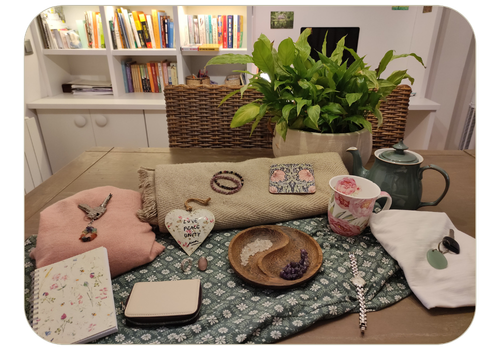
When I worked with a brand designer, she sent me a detailed questionnaire about my business and asked for my ideal colours. I had fun prepping this display of the vibe I was going for to appeal to women service providers. You can see from the colours on my website that my brand designer captured all the natural, warm, feminine tones perfectly.
Icons to support your marketing
Lastly, knowing your copy and main marketing messaging pillars will also help the designer choose a set of icons to support your themes.
In case, like me, you didn’t know, there are tons of icon sets available for purchase. (See Creative Market, for instance.) But there are so many to choose from, it can be overwhelming. Your designer will find you the ideal set to get you started.
What’s in a brand kit?
At the very minimum, you want:
- two logo designs,
- a palette of between five and seven colours
- two fonts (one should be a typeface, i.e. a family of fonts with different weights and variations).
My brand kit included the following:
- Three different logo designs, each with different colour variations.
- A full palette with one signature colour, three primary supports and three secondary supports.
- Three different fonts with suggestions on which ones to use for headers, body text or buttons.
- One set of icons in gold, white and black, but which can also be used in my brand colours.
- Image style and portrait style inspiration: pictures of me that I had sent her and images of backgrounds, motifs and other businesswomen the designer found. (Really useful to show my brand photographers the vibe and poses I wanted to create.)
- Website mockup: I don’t think every brand designer does this but mine just happened to be a web designer too. Her initial idea formed the basis for my current website design.
Not all brand designers will provide the same elements but they might offer different packages. Compare options from two or three designers and find an offer to suit your budget.
Who creates your brand kit?
A brand designer.
Key questions
Do you like the brand identities they’ve created for others?
Can they explain how certain palettes they’ve chosen relate to their clients’ business goals?
What’s included in the quote for the brand kit?
Can you give them ideas for colours?
Do they want to see your website copy?
(Not every brand designer will say yes, but they should at least be curious about your offers and your audience to understand how the colours will reinforce your messaging.)
Biggest mistakes to avoid
Not asking what’s included in the package.
Hiring a brand designer who’s not curious about your business goals, target audience, brand messaging and personal colour preferences.
Reason not to worry
Your brand designer should be happy to adjust any elements to give you a brand kit you love.
STEP 4 Find a local brand photographer for your photo shoot
Now you’re ready to hire a brand photographer.
Having your photos taken can feel like the most challenging step for some people. I know it was for me. But, as I told myself, “You’ll never be as young as you are now.” And I knew that professional brand images were essential to make the right impression with my ideal clients and to help build trust. Not just on my website but on all my marketing channels.
Remember, not all the photos will be of you or your whole body. Your photographer can shoot from different angles and you can use props to cover certain areas. They can take pictures of your work, your workspace, the tools you use and other elements that complement your business. If you do the brand shoot at home, there can also be shots of different rooms or the garden and an occasional nod to your personal tastes and interests.
Why your brand photos should come after your website copy
Your website copy and brand kit will give your photographer a strong foundation to work from. They’ll be better equipped to suggest strategic images that harmonise with your business goals and appeal to your target audience.
Not to mention the fact that you’ll be able to wear your brand colours and use them in props to give a fully cohesive brand image.
Most importantly, in my opinion, you’ll be able to ask for images that support the words on each page of your website.
When I did my first brand shoot, I hadn’t written all the copy yet. It was hard shoe-horning some of the images into the design to fit the copy. And in some instances, I had to adapt the copy to fit the image, which is less than ideal. (A mistake I rectified a year and a half later on my second brand shoot.)
As service providers, your messaging should be guiding the tone, style and content of all the visuals, not the other way around.
What’s included in the brand shoot package?
Most brand photographers have different packages to choose from. Prices vary according to the number of:
- final images
- locations
- outfit changes.
Pay close attention to the fine print and check for hidden costs. Thankfully it’s not common but some photographers license the images so you only have access to them for a limited time or have to pay a recurring fee. Make sure the photos will be yours forever for a one-time fee.
Visual style and personal connection
Even if someone you trust has recommended a particular photographer, I’d still search for a few good local photographers to see if you prefer their visual style for your brand. Compare different offers and then call two of your favourites to see whether you feel comfortable chatting to them.
After all, while you might never meet your copywriter, brand designer and web designer in real life, this is the one service provider you must work with in person. Having a sense of connection with all of them is important but especially with your photographer. You want to work with someone who makes you feel at ease for a better experience on the shoot.
By the way, you’ll find an in-depth article on how to prepare for your first brand photo shoot at the end of this section.
Who does your brand photo shoot?
A professional brand photographer.
Key questions
What’s included in each brand photo shoot package?
Will they send you full-size photos and web-sized photos?
Will the photos belong to you or will they be licensed to you for a limited time?
How and when will they send you the images after the shoot?
What sort of editing do they do and can you request edits after they’ve sent you the photos?
Biggest mistake to avoid
Not having ownership of your photos.
Reasons not to worry
You’ll never be as young as you are today.
It’s the brand photographer’s job to make you look great.
ARTICLE

STEP 5 Trust a reputable web designer to put it all together
Now you’ve got all the elements your web designer needs: sparkling copy for your clearly defined offers, a beautiful brand kit and professional brand photos.
Web design involves two elements: the graphic design and the programming. These two phases might be done by the same person or by two people. For ease of process and communication, I recommend working with a designer who does both.
Creative, clean and clear web design
The web designer’s job is to forge a design based on the copy provided by the copywriter and creative use of your brand visuals. A good web designer will make sure your website has consistent formatting on each page and streamlined coding with no clutter or heavy files on the back end.
What you want is a website with a clear layout that’s easy to navigate and fast to load. Some copywriters only provide the text, but for new website projects I always include specific instructions on how the copy should be presented:
- overall site structure (pages and menu)
- individual page structure
- text hierarchy (H1, H2, body text, etc. – very important for SEO)
- text format (boxes, lists, etc.)
- links and buttons.
The copywriter and the designer should both make sure there is plenty of white space to make the content easy to scan.
For inspiration, you can provide the designer with examples of sites you like – in or out of your sector. However, bear in mind that the web designer will offer their own strategic input and might be constrained by technical considerations.
Collaborative copy revisions
If there isn’t enough space for all the copy, ask your copywriter to edit the content. Don’t let the web designer cut out words or try to do it yourself as you may lose SEO keywords or critical parts of your persuasive messaging.
As part of my website copywriting service, I offer a second revision once the copy is on the page to make sure the right words still appear in the final design. I’m happy to collaborate with your web designer so you get the best possible results.
Choosing your web design platform
In my opinion, the best options available at the moment are WordPress and SquareSpace. Be sure to use WordPress.org not WordPress.com. WordPress.org lets you develop bespoke designs whereas WordPress.com only offers templates, which restricts the development possibilities.
WordPress can be a little trickier to update if you know nothing about web design. But it offers limitless design options and has great plugins to support your business goals. Your web designer should be able advise you on which ones to install.
SquareSpace has some beautiful templates and they say it’s easy for anyone to update. On the other hand, I’ve also heard it’s more limited in terms of design unless you’re a web design wizard.
Web design expert Paige Brunton once described SquaredSpace as the Apple of platforms for its intuitive functionality, comparing WordPress with Android.
My own website is on WordPress and I don’t have any personal experience with SquareSpace. It’s worth investigating both these options and other platforms to see which one best suits your business needs and your technical abilities if you want to update your website yourself in the future. Do this before you look for a web designer and then find someone who specialises in your chosen platform.
If you’d like some recommendations for web designers who work with SquareSpace or WordPress, you’ll find a link to my Trusted Providers page at the end of this post.
Hosting and maintenance
Some web designers offer private hosting. Never use this option. You should be free to host your website wherever you want. Search for the best options before you hire your website designer, although you can certainly listen to their suggestions.
Make sure the web designer’s contract doesn’t oblige you to pay an ongoing maintenance fee. That should be a separate service. Ask about their maintenance packages or what their hourly rate for future work is. But you want to be free to go to someone else for updates or changes.
Who designs your website?
A professional web developer (with or without a graphic designer).
A professional web designer (who does both the design and the programming).
Key questions
Do they have good reviews and references?
Where will your website be hosted?
Will you be able to update your website by yourself once it’s finished?
Do they offer a maintenance package and how much does it cost?
Can you send you a few examples of designs you like (or the mockup design in your brand kit)?
Biggest mistakes to avoid
Not checking client reviews.
Missing hidden maintenance or hosting costs that keep you tied to your designer for an indefinite period of time.
Reason not to worry
If you work with a reputable web designer, they should have a proven process to give you an effective and efficient website on schedule.
Summary and trusted professional creatives
So, there you have it, a full overview of who you’ll need to work with to create a professional website and in what order.
Here’s a reminder of the five steps to give you a professional website that attracts your target audience and converts more visitors into paying clients…
Looking for trusted website and brand service providers?
Finding good people to work with can be hard. That’s why I have a special page on my website with personal recommendations for each stage of the web design process.
Of course, you will need to find a local brand photographer unless you are lucky enough to live near one of my favourites.
And if you need a professional website copywriter, look no further!
I’m a website copywriter for women service providers who are ready to invest in professionally written website copy that matches the quality of their services.
Related Articles


Subscribe to my newsletter
Once a month, you’ll get:
- Tips to improve your website copy, blog content and email sequences.
- Business and marketing insights.
- Special offers just for my subscribers and the occasional free resource.
- Exclusive access to my Monthly Review & Preview Sessions – free and friendly accountability to keep you moving towards your goals.
And I promise not to flood your inbox with multiple welcome emails (my personal bugbear) and to keep each newsletter brief.